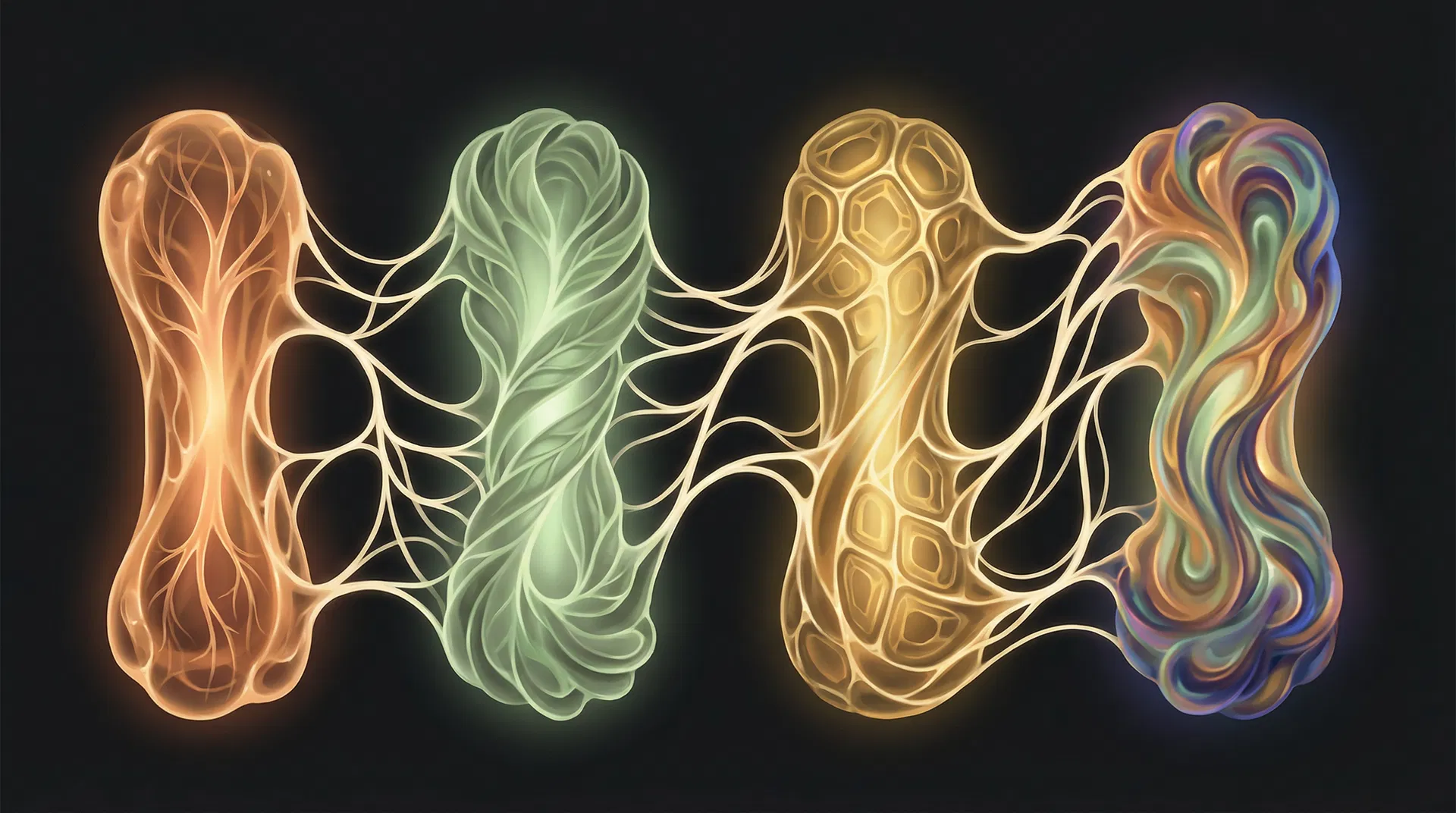
The Peace Protocol
The four-pillar recalibration process that takes you from survival to internal authority. This is the flagship methodology of The High Level Life Method.
From Survival to Internal Authority
The Peace Protocol is not a list of tips or a collection of techniques. It is a sequential, four-phase recalibration process designed specifically for high-capacity individuals who have achieved external success but are operating from internal survival. It was synthesized by Jen Guidry from over 20,000 hours of research and real-world application in the fields of neuroscience, trauma recovery, identity work, and peak performance.
The four pillars — Regulation, Separation, Installation, and Embodiment — are designed to be worked in order. Each phase solves a specific problem and creates the foundation for the next. Skipping phases or working them out of order produces incomplete results. This is why traditional approaches often fail: they start with the mind (Phase 2) or identity (Phase 3) without first stabilizing the body (Phase 1). You cannot build a stable structure on an unstable foundation.
Regulation
Stabilize the Body
Peace begins in the nervous system, not the mind. If the body is signaling threat, the brain will generate threat-based thoughts. No amount of mindset work can override a dysregulated nervous system. This is the foundational principle of The Peace Protocol and the reason we start here.
Regulation is not about relaxation — it is about restoring the nervous system's ability to flexibly shift between states. A regulated nervous system can activate when needed (to meet a deadline, handle a crisis, perform at a high level) and then return to baseline when the challenge passes. The problem is not activation — the problem is getting stuck in activation.
This phase uses the bottom-up techniques covered in Module 5: breathwork, somatic exercises, vagus nerve stimulation, cold exposure, shaking, and targeted movement. The goal is to create enough physiological safety that the prefrontal cortex comes back online — because you will need it for Phase 2.
You are chronically fatigued, your mind will not shut off at night, and you find yourself snapping at the people you care about. Your body is stuck in a constant state of threat. You may have tried meditation, but your nervous system is too activated to sit still. You may have tried exercise, but you are using it to burn off anxiety rather than to regulate.
We do not start with mindset — we start with biology. Using somatic tools, trauma release breathwork, vagus nerve stimulation, and targeted nervous system exercises, we move your body out of chronic fight-or-flight. We teach your nervous system what safety actually feels like in the body — not as a concept, but as a lived physiological experience.
You sleep deeply. The unexplained muscle tension in your neck and jaw disappears. You can sit still without feeling a persistent sense of urgency or impending doom. You finally feel safe in your own body. Your baseline shifts from activation to calm.
Separation
Stabilize the Mind
Once the nervous system is stabilized, the next step is separating from the unconscious thought patterns that have been running the show. Most people believe their thoughts are reality. They are not. Thoughts are predictions, memories, interpretations, and survival patterns — generated by a brain that is trying to keep you safe based on past experience.
Separation is the practice of developing what is sometimes called the 'observer self' or 'witness consciousness' — the part of you that can watch your thoughts and reactions without being fused with them. This is not dissociation (which is a dorsal vagal response); it is a higher-order cognitive skill that requires a regulated nervous system to access.
In this phase, we identify the specific thought patterns, cognitive biases, and emotional triggers that drive your reactive behavior. We map the 'trauma hustles' — the ways you have learned to use achievement, control, perfectionism, or people-pleasing as survival strategies. And we install a Trigger Pause protocol that creates space between stimulus and response.
You are controlled by unconscious thought patterns, cognitive biases, and what we call 'trauma hustles' — using achievement to secure your worth. You react automatically to triggers. You believe your thoughts are reality. You cannot distinguish between a genuine insight and a fear-based narrative.
We untangle your identity from your thoughts. We map your core wounds, identify your primary survival patterns, and establish a 'Trigger Pause' protocol — the ability to observe a thought or emotional reaction without being consumed by it. This is not suppression; it is the development of the observer self.
You observe stressful situations without absorbing them. When a crisis hits at work, you do not spiral. You make clear, objective decisions because you are no longer reacting from a place of unhealed wounds. You can feel an emotion without becoming the emotion.
Installation
Stabilize Identity
Once the mind is no longer fused with fear-based thought patterns, identity becomes adjustable. Most people live from an identity shaped by past stress, survival experiences, and the expectations of others. This identity feels like 'who they are,' but it is actually a survival adaptation — a version of self that was constructed to navigate threat.
Installation is the process of consciously constructing a new identity rooted in internal certainty, peace, and authentic authority. This is not about creating a fantasy self or pretending to be someone you are not. It is about accessing the version of yourself that exists beneath the survival adaptations — the version that was always there but was buried under layers of protective programming.
This phase leverages the RAS (Reticular Activating System) that we covered in Module 4. By deliberately installing new identity beliefs and reinforcing them through specific practices, we reprogram the brain's filter to seek evidence that supports the new identity. Over time, the new identity becomes the default — not through willpower, but through neural pathway strengthening.
You are operating from a 'Performer' identity — constantly scanning for threats, rejection, or the next fire to put out. Your success feels hollow because it is driven by fear. You do not know who you are when you are not performing for someone else.
We use neuroplasticity to deliberately reprogram the Reticular Activating System (RAS). We construct an 'Authentic' identity based on internal certainty rather than external validation. This is not affirmation work — it is a systematic process of neural reprogramming that changes what your brain filters for.
You no longer need external validation to feel secure. You trust yourself implicitly. You wake up feeling grounded, knowing exactly who you are when you are not performing for anyone else. Your sense of worth is no longer contingent on your last achievement.
Embodiment
Stabilize Behavior
Identity becomes real through action. It is not enough to know who you want to be — you must behave as that person consistently, especially under pressure. Embodiment is the process of closing the gap between who you know yourself to be (installed identity) and how you actually show up in the world.
This phase introduces 'Proof Actions' — deliberate behaviors that are aligned with the new identity and create cognitive dissonance with the old survival patterns. When you consistently behave in ways that contradict your old programming, the brain is forced to update its model of who you are. This is neuroplasticity in action.
Embodiment also includes building a sustainable maintenance plan. Regulation is not a one-time event — it is an ongoing practice. This phase establishes the daily, weekly, and monthly practices that keep the nervous system regulated, the mind clear, the identity stable, and the behavior aligned. The goal is to make peace the default, not the exception.
You know what you should do, but under pressure, you regress to old survival behaviors. The peace never lasts. You have moments of clarity and calm, but they do not stick. When stress increases, you default to old patterns.
We design 'Proof Actions' — daily behaviors that force cognitive dissonance and compel your brain to update its self-concept. We build a long-term somatic maintenance plan that ensures the nervous system remains regulated. We create accountability structures that make the new identity the path of least resistance.
Peace is no longer a temporary state you visit on vacation — it is your permanent baseline. You lead with absolute authority, handle massive responsibility with ease, and finally enjoy the life you have worked so hard to build. The old survival patterns still exist, but they no longer run the show.
Why The Peace Protocol Works When Other Approaches Have Not
| Approach | What It Addresses | What It Misses |
|---|---|---|
| Talk Therapy | Cognitive patterns, emotional processing | Body-level dysregulation, identity, behavior change |
| Mindset Coaching | Beliefs, goals, motivation | Nervous system state, trauma, somatic patterns |
| Meditation / Mindfulness | Present-moment awareness, thought observation | Active dysregulation, identity work, behavior design |
| Productivity Systems | External organization, time management | Internal state, nervous system, root cause of reactivity |
| The Peace Protocol | Body, mind, identity, and behavior — in sequence | Addresses the whole system in the correct order |
Most approaches address one dimension of the problem. Talk therapy works with the mind but often ignores the body. Mindset coaching works with beliefs but skips the nervous system. Meditation builds awareness but does not actively address dysregulation or identity. Productivity systems organize the external world while the internal world remains in chaos.
The Peace Protocol addresses all four dimensions — body, mind, identity, and behavior — in the biologically correct sequence. It does not patch symptoms. It reorganizes the entire system from the foundation up.
This Is What You Have Been Looking For
You have just read the framework. Now imagine having Jen Guidry personally guide you through each phase — stabilizing your nervous system, separating from survival patterns, installing a new identity, and embodying it until peace is your permanent baseline. That is what The High Level Life Method delivers.
Module 6 Key Takeaways
The Peace Protocol is a sequential four-pillar process: Regulation (body), Separation (mind), Installation (identity), Embodiment (behavior).
The order matters — each phase creates the foundation for the next. Skipping phases produces incomplete results.
Phase 1 (Regulation) stabilizes the body using bottom-up somatic tools and breathwork.
Phase 2 (Separation) develops the observer self and untangles identity from reactive thought patterns.
Phase 3 (Installation) reprograms the RAS and constructs a new identity rooted in internal certainty.
Phase 4 (Embodiment) closes the gap between identity and behavior through Proof Actions and maintenance practices.
The Peace Protocol works because it addresses the whole system in the biologically correct sequence.
Go Deeper
This module is part of the knowledge foundation. When you are ready to move from understanding to guided implementation, The High Level Life Method provides the structure, support, and expertise to transform what you have learned into lasting change.
Learn more at The High Level Life